'%3e%3cpath%20d='M258.922%20290.359C223.121%20290.359%20203.784%20256.732%20190.758%20215.245L172.334%20156.547L145.044%2069.6859L126.619%2011.0002H211.697C247.487%2011.0002%20266.821%2044.6403%20279.848%2086.1117L298.286%20144.825L325.563%20231.659L344%20290.359H258.922Z'%20fill='url(%23paint0_linear_82_635)'/%3e%3c/g%3e%3cmask%20id='mask1_82_635'%20style='mask-type:luminance'%20maskUnits='userSpaceOnUse'%20x='0'%20y='11'%20width='218'%20height='280'%3e%3cpath%20d='M132.316%2011.0002C96.5144%2011.0002%2077.1787%2044.6403%2064.153%2086.1117L45.7144%20144.825L18.4386%20231.659L0%20290.359H85.0922C120.882%20290.359%20140.216%20256.732%20153.243%20215.245L171.68%20156.547L198.957%2069.6859L217.395%2011.0002H132.316Z'%20fill='white'/%3e%3c/mask%3e%3cg%20mask='url(%23mask1_82_635)'%3e%3cpath%20d='M132.316%2011.0002C96.5144%2011.0002%2077.1787%2044.6403%2064.153%2086.1117L45.7144%20144.825L18.4386%20231.659L0%20290.359H85.0922C120.882%20290.359%20140.216%20256.732%20153.243%20215.245L171.68%20156.547L198.957%2069.6859L217.395%2011.0002H132.316Z'%20fill='url(%23paint1_linear_82_635)'/%3e%3c/g%3e%3cdefs%3e%3clinearGradient%20id='paint0_linear_82_635'%20x1='129.799'%20y1='281.578'%20x2='400.059'%20y2='102.671'%20gradientUnits='userSpaceOnUse'%3e%3cstop%20stop-color='%23AC5EF8'/%3e%3cstop%20offset='0.524038'%20stop-color='%23803CFA'/%3e%3cstop%20offset='1'%20stop-color='%235E1AE6'/%3e%3c/linearGradient%3e%3clinearGradient%20id='paint1_linear_82_635'%20x1='3.17997'%20y1='281.578'%20x2='273.447'%20y2='102.655'%20gradientUnits='userSpaceOnUse'%3e%3cstop%20stop-color='%23AC5EF8'/%3e%3cstop%20offset='0.524038'%20stop-color='%23803CFA'/%3e%3cstop%20offset='1'%20stop-color='%235E1AE6'/%3e%3c/linearGradient%3e%3c/defs%3e%3c/svg%3e)

How to find your pelvic floor muscles: a guide for men

Key takeaways
- The pelvic floor is a layer of muscle between the pubic bone and the tailbone. In men, a correct squeeze draws the base of the penis in slightly and lifts the testicles.
- The words you use matter. In an ultrasound study, the vague cue "squeeze your pelvic floor muscles" worked for 69% of young men, while concrete cues worked for 89 to 94%.
- Your belly, buttocks and thighs stay relaxed, and you keep breathing. If they join in, make the squeeze smaller.
- Stopping your urine once or twice can confirm you have found the muscles. Doing it regularly can disrupt how your bladder empties.
- If you still cannot feel a squeeze, or it hurts, a pelvic floor physiotherapist can check your technique, often with biofeedback.
Kegels only work if you squeeze the right muscles. That sounds simple, but about 40% of people do not do a Kegel correctly the first time, according to Mayo Clinic Health System. This guide covers where the pelvic floor is, five ways for men to find it, how to check in a mirror, and what to do when nothing seems to happen.
Where the pelvic floor is
The pelvic floor is a layer of muscle between the pubic bone at the front and the tailbone (coccyx) at the back. It supports the bladder and bowel and helps you control when you pass urine or empty your bowels (Lancashire and South Cumbria NHS Foundation Trust).
In men, the muscles at the front help keep blood in the penis once it has filled, which makes an erection firmer (Pelvic Floor First). Two of them, the ischiocavernosus and the bulbocavernosus, raise the pressure inside the erectile tissue (Dorey et al., 2004). That is why several of the cues below point to the penis and the testicles.
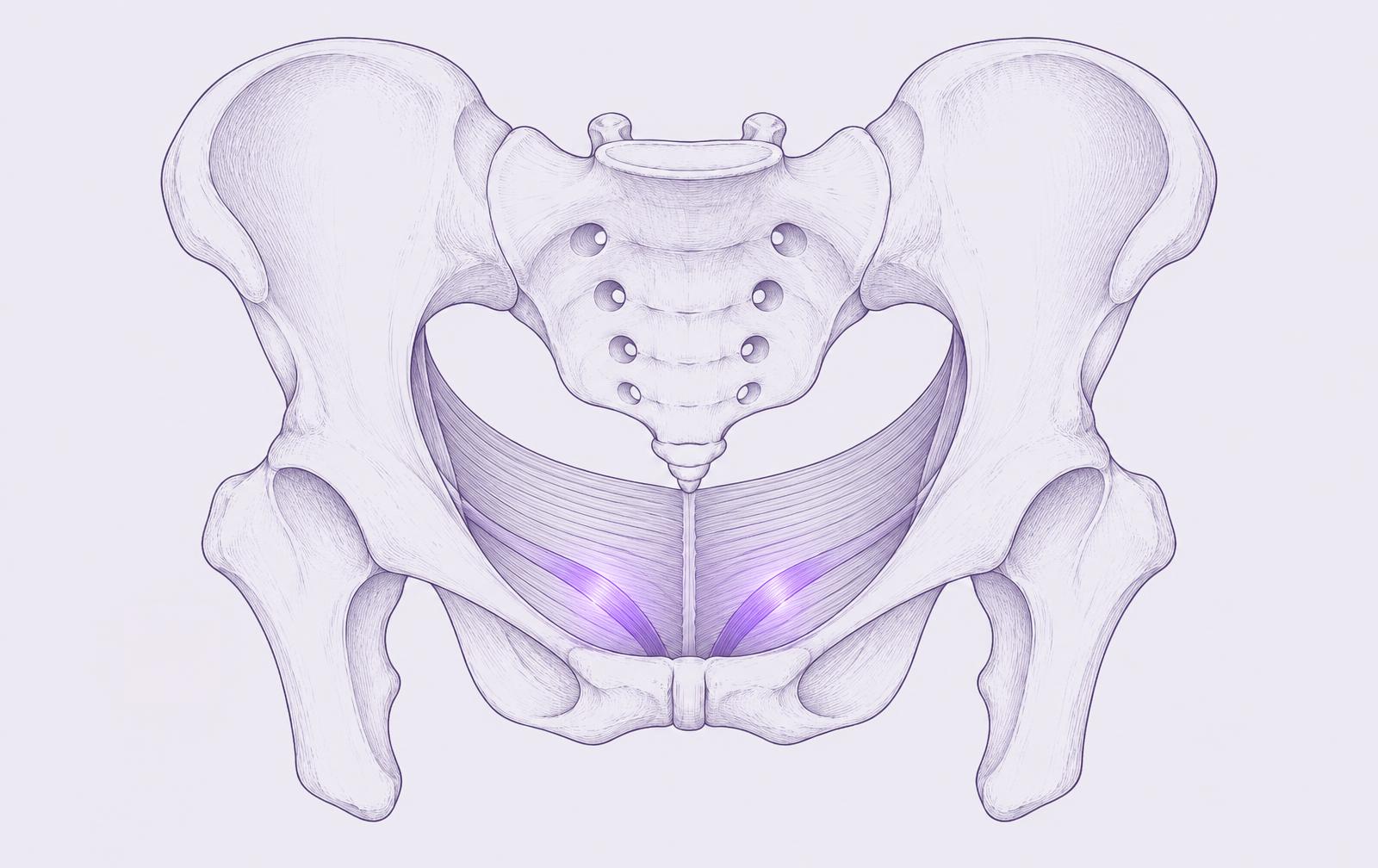
Schematic. The pelvic floor across the base of the pelvis, with the two muscles at the front highlighted.
Five ways to find the muscles
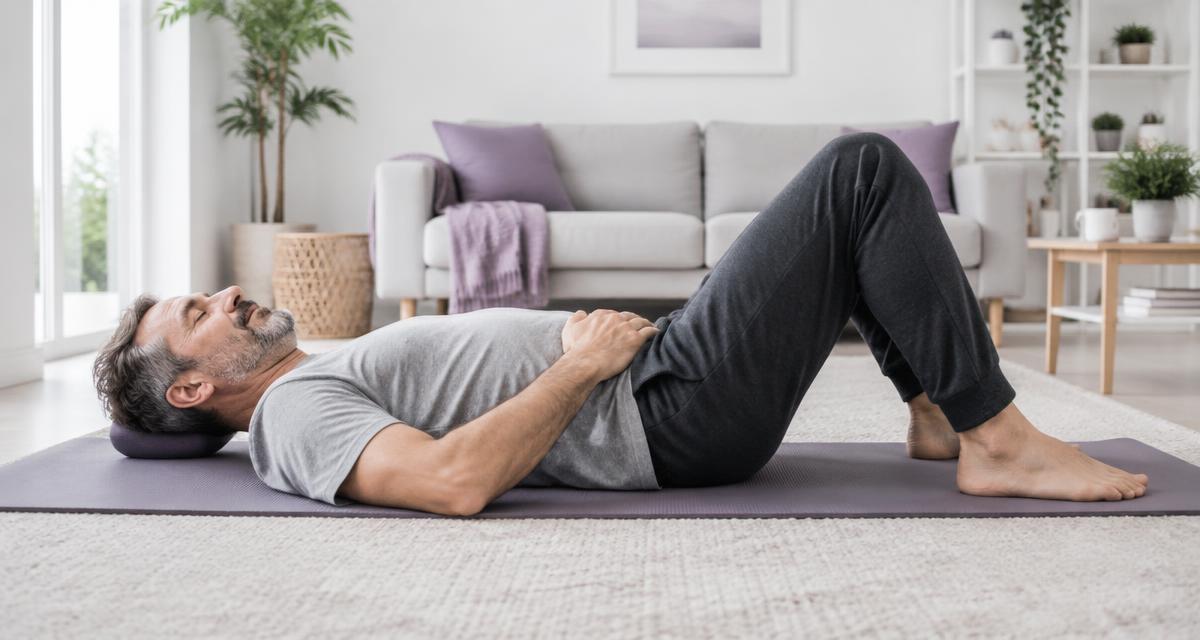
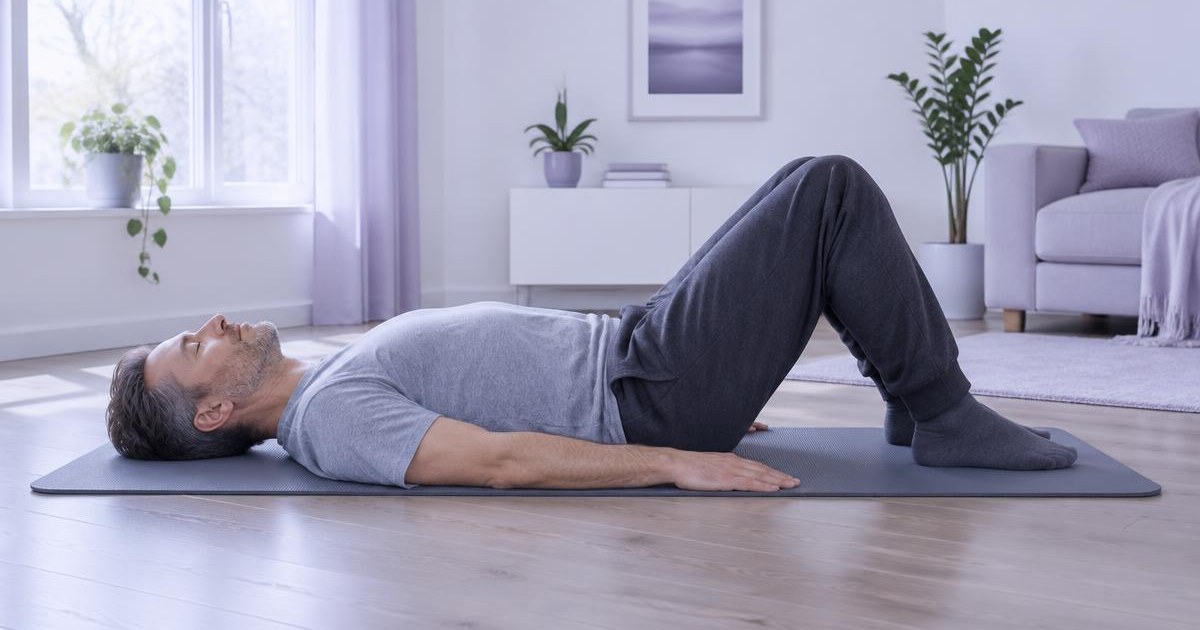
Start lying down, with your bladder empty. Many men find lying down easiest at first (Mayo Clinic, MedlinePlus). Try one cue at a time and keep each squeeze gentle.
- Shorten the penis. Think of drawing the base of the penis in towards your body, without moving your legs or buttocks. In a 2022 ultrasound study of 35 healthy young men, this cue produced a correct upward lift in 94% of them (Ben Ami et al., 2022). An earlier study of 15 men found it gave the most activity in the sphincter around the urethra (Stafford et al., 2016).
- Hold in wind. Squeeze as if you were stopping gas from escaping. The cue "squeeze your anus" also worked for 94% of the men in the 2022 study (Ben Ami et al., 2022). In the earlier study, a similar cue, "tighten around the anus", produced the most activity in the anal sphincter (Herman & Wallace). Once you have found the squeeze this way, try to feel it at the front as well.
- Lift the testicles. The cue "elevate the scrotum" worked for 91% of the men (Ben Ami et al., 2022).
- Slow the stream, once. Midway through urinating, try to slow or stop the flow. This cue worked for 89% of the men (Ben Ami et al., 2022). Try it once or twice at most, because doing it regularly can disrupt how your bladder empties (Continence Health Australia).
- Use your fingertips. Place your fingertips on the skin just behind the scrotum. When you squeeze, the area should tighten and lift away from your fingers (Lancashire and South Cumbria NHS Foundation Trust).
The vague instruction "squeeze your pelvic floor muscles" worked for only 69% of the same men (Ben Ami et al., 2022). If one cue does nothing for you, switch to another.
Check it in a mirror
Stand in front of a mirror without clothes. Squeeze and lift as if you were stopping the flow of urine and holding in wind at the same time (Lancashire and South Cumbria NHS Foundation Trust).
The base of the penis should draw in slightly towards your belly and the testicles should lift (Continence Health Australia). When you relax, you should feel a clear sense of letting go (Pelvic Floor First, Continence Health Australia).
Not sure where you are starting from? Take the 3-minute quiz.
Signs you are squeezing the wrong muscles
- Your buttocks, thighs or belly tighten. These should stay relaxed during a Kegel (Mayo Clinic).
- You hold your breath. Breathe freely throughout. Counting out loud during the hold helps, because you cannot count without breathing (Cleveland Clinic).
- It feels like pushing down. A correct squeeze lifts, with relaxed breathing and a soft belly. Over-tightening tends to bring breath-holding with it (Canberra Health Services).
- You see no movement in the mirror even when the squeeze feels strong. The effort is probably going somewhere else.
What to do when you cannot feel anything
Make the squeeze smaller. If it feels like straining, start again with a gentler squeeze, keeping your breathing relaxed and your belly soft (Canberra Health Services).
Try another cue. Different words recruit different parts of the pelvic floor (Herman & Wallace). If "shorten the penis" does nothing, try "hold in wind" or "lift the testicles".
Relax first. If the muscles are already tense, it is very difficult to contract them effectively (Royal United Hospitals Bath NHS Foundation Trust). Take a few slow breaths in through your nose and let your belly and pelvic floor soften (University Hospitals Plymouth NHS Trust), then try again. Our guide to reverse Kegels explains the release step by step.
Get it checked. A pelvic floor physiotherapist (a pelvic floor physical therapist in the US) can check your technique, often with biofeedback (Australian Government Department of Health, Cleveland Clinic). Pelvic floor exercises work best when they are tailored and monitored for you (Pelvic Floor First).
After prostate surgery
Prostate surgery can weaken the pelvic floor, along with age, diabetes and an overactive bladder (Mayo Clinic Health System). If you have had surgery, follow the plan from your surgical team or physiotherapist rather than a general guide.
When to see a doctor
See a doctor before you start, or alongside training, if you have:
- pain in the pelvis, penis or testicles, or pain during the exercises
- blood in your urine or semen
- erection problems that started suddenly
- erection problems together with chest pain or diabetes
Erection problems can be an early warning sign of heart disease, because the arteries in the penis are smaller than those that supply the heart (Mayo Clinic).
Once you have found them
When you can find the muscles reliably, lying down and then sitting, move on to a routine. Our guide to Kegel exercises for men covers sets, holds and how long results take. If you notice tension rather than weakness, read about a tight pelvic floor in men first.
The Adaging program starts with Release and has you record your own numbers on day 1, so you can retest against them later. The quiz takes 3 minutes.
Frequently asked questions
Sources
- Verbal instruction for pelvic floor muscle contraction among healthy young males. Ben Ami et al. International Journal of Environmental Research and Public Health. 2022.
- Pattern of activation of pelvic floor muscles in men differs with verbal instructions. Stafford et al. Neurourology and Urodynamics. 2016.
- Verbal instructions and pelvic floor contractions in men (summary of Stafford et al.). Herman & Wallace Pelvic Rehabilitation Institute.
- Randomised controlled trial of pelvic floor muscle exercises and manometric biofeedback for erectile dysfunction. Dorey G et al. British Journal of General Practice. 2004.
- Pelvic floor muscle exercise information sheet for men. Lancashire and South Cumbria NHS Foundation Trust.
- Pelvic floor exercises for men. Continence Health Australia.
- Pelvic floor training: a men's issue. Pelvic Floor First.
- Men: working your pelvic floor. Pelvic Floor First.
- Kegel exercises for men: Understand the benefits. Mayo Clinic.
- Kegels are for men too. Mayo Clinic Health System.
- Kegel exercises for men. Cleveland Clinic.
- Hypertonic pelvic floor. Cleveland Clinic.
- Kegel exercises. MedlinePlus, US National Library of Medicine.
- Pelvic floor exercises for people with a penis. Canberra Health Services.
- Pelvic floor muscle training for men. Australian Government Department of Health.
- Relaxing the pelvic floor. Royal United Hospitals Bath NHS Foundation Trust. 2021.
- Pelvic floor relaxation. University Hospitals Plymouth NHS Trust.
- Erectile dysfunction: A sign of heart disease?. Mayo Clinic.
Adaging is an educational wellness program. It is not medical advice and does not replace a consultation with a doctor.
Adaging Editorial Team
We write from published research and clinical guidelines, and we say what the evidence does not show. How we write and check our content