'%3e%3cpath%20d='M258.922%20290.359C223.121%20290.359%20203.784%20256.732%20190.758%20215.245L172.334%20156.547L145.044%2069.6859L126.619%2011.0002H211.697C247.487%2011.0002%20266.821%2044.6403%20279.848%2086.1117L298.286%20144.825L325.563%20231.659L344%20290.359H258.922Z'%20fill='url(%23paint0_linear_82_635)'/%3e%3c/g%3e%3cmask%20id='mask1_82_635'%20style='mask-type:luminance'%20maskUnits='userSpaceOnUse'%20x='0'%20y='11'%20width='218'%20height='280'%3e%3cpath%20d='M132.316%2011.0002C96.5144%2011.0002%2077.1787%2044.6403%2064.153%2086.1117L45.7144%20144.825L18.4386%20231.659L0%20290.359H85.0922C120.882%20290.359%20140.216%20256.732%20153.243%20215.245L171.68%20156.547L198.957%2069.6859L217.395%2011.0002H132.316Z'%20fill='white'/%3e%3c/mask%3e%3cg%20mask='url(%23mask1_82_635)'%3e%3cpath%20d='M132.316%2011.0002C96.5144%2011.0002%2077.1787%2044.6403%2064.153%2086.1117L45.7144%20144.825L18.4386%20231.659L0%20290.359H85.0922C120.882%20290.359%20140.216%20256.732%20153.243%20215.245L171.68%20156.547L198.957%2069.6859L217.395%2011.0002H132.316Z'%20fill='url(%23paint1_linear_82_635)'/%3e%3c/g%3e%3cdefs%3e%3clinearGradient%20id='paint0_linear_82_635'%20x1='129.799'%20y1='281.578'%20x2='400.059'%20y2='102.671'%20gradientUnits='userSpaceOnUse'%3e%3cstop%20stop-color='%23AC5EF8'/%3e%3cstop%20offset='0.524038'%20stop-color='%23803CFA'/%3e%3cstop%20offset='1'%20stop-color='%235E1AE6'/%3e%3c/linearGradient%3e%3clinearGradient%20id='paint1_linear_82_635'%20x1='3.17997'%20y1='281.578'%20x2='273.447'%20y2='102.655'%20gradientUnits='userSpaceOnUse'%3e%3cstop%20stop-color='%23AC5EF8'/%3e%3cstop%20offset='0.524038'%20stop-color='%23803CFA'/%3e%3cstop%20offset='1'%20stop-color='%235E1AE6'/%3e%3c/linearGradient%3e%3c/defs%3e%3c/svg%3e)

Reverse Kegels for men: how to relax your pelvic floor
On this page
- What is a reverse Kegel?
- Why the release matters for men
- How to do a reverse Kegel, step by step
- How to tell it is working
- Reverse Kegels vs Kegels
- Common mistakes
- Positions that make letting go easier
- The same skill on the toilet
- Reverse Kegels and premature ejaculation
- What the research shows, and what it does not
- When to see a doctor or a physiotherapist
- Where Adaging fits
Key takeaways
- A reverse Kegel is a deliberate release: the pelvic floor lets go and drops back to rest. A Kegel works in the opposite direction, squeezing and lifting.
- The release is gentle. A clinical handout on the exercise says not to push or bulge the pelvic floor.
- Breathing does much of the work. On the in-breath the diaphragm lowers and the pelvic floor relaxes with it.
- Relaxation-focused pelvic floor physiotherapy has some trial evidence in chronic pelvic pain. We found no trial of reverse Kegels on their own for premature ejaculation.
- Pain, trouble passing urine or new sexual symptoms need a doctor or a pelvic floor physiotherapist before more exercise.
Kegels teach the pelvic floor to squeeze. A reverse Kegel trains the other half of the job: letting the muscles go. This guide explains what a reverse Kegel is, how to do one without pushing, how it differs from a Kegel, and what the research does and does not show.
What is a reverse Kegel?
A reverse Kegel is a deliberate release of the pelvic floor. You let the muscles relax and drop back to rest, usually on an in-breath. Physiotherapists also call it a pelvic floor drop or down-training (Pelvic Health Solutions).
Healthy pelvic floor muscles do two things. They contract when you need them to, then relax back to their resting position (University Hospitals Plymouth NHS Trust). A Kegel trains the first part. A reverse Kegel trains the second.
The release feels similar to the moment of relief when you start to pass urine or open your bowels (Chronic Pain Centre, Calgary).
Why the release matters for men
Some men carry too much tension in the pelvic floor. Cleveland Clinic calls this a hypertonic pelvic floor. In men it can show up as erection problems, pain with erection or ejaculation, a stream that is hard to start, or pain in the pelvis (Cleveland Clinic).
Tension also gets in the way of a good squeeze. When the pelvic floor is already tense, it is very difficult to contract it effectively (Royal United Hospitals Bath NHS Foundation Trust). Pelvic floor physiotherapists point out that more squeezing does not deal with the tension and can make the muscles tighter (Proactive Pelvic Health Centre).
Our guide to a tight pelvic floor in men covers the signs in more detail.
How to do a reverse Kegel, step by step
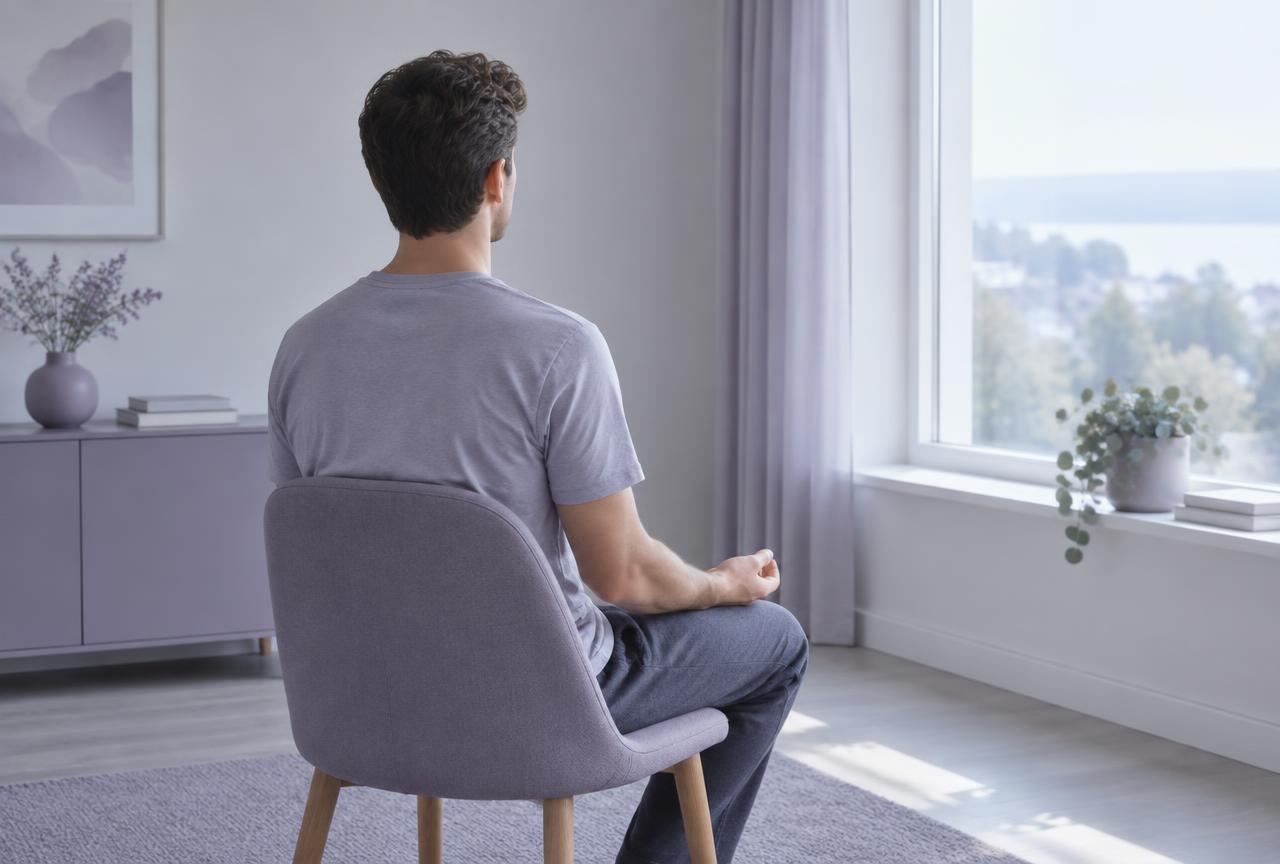
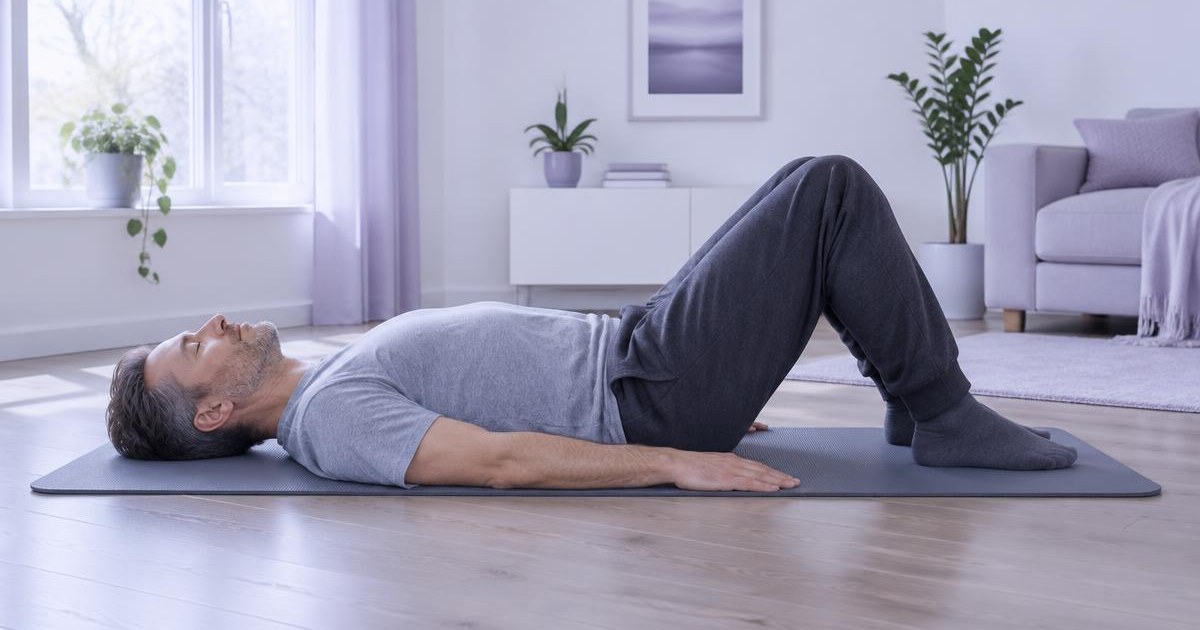
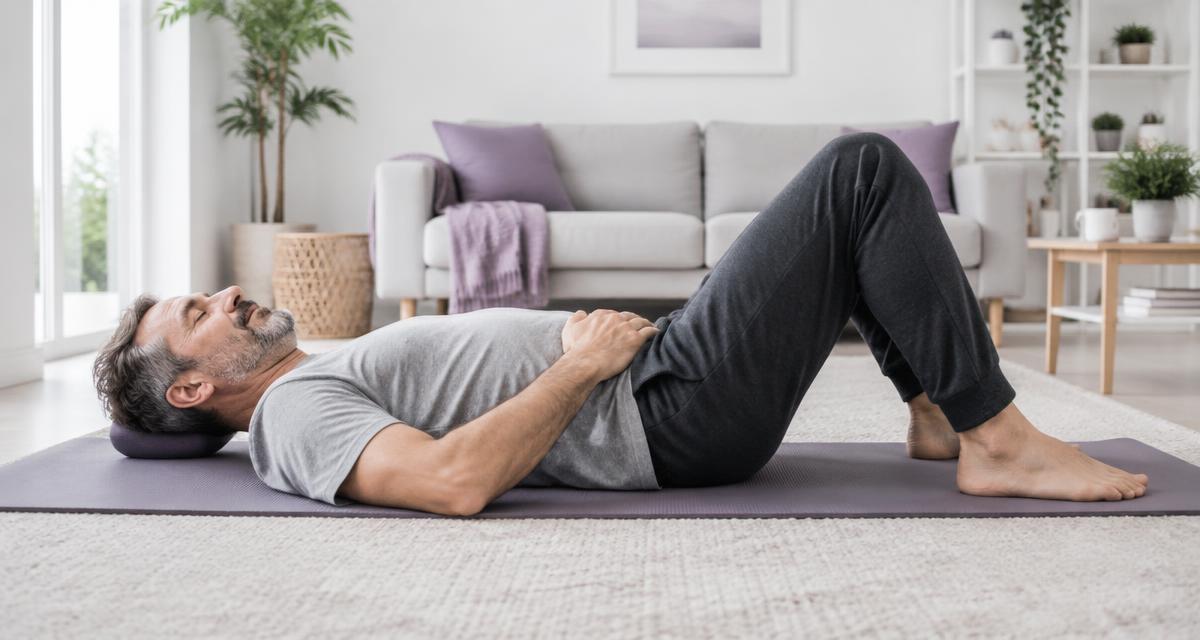
- Get comfortable. Lie on your back with your knees bent, or sit on a chair with your feet flat on the floor (Chronic Pain Centre, Calgary).
- Find the muscle first. Gently squeeze as if you were stopping the flow of urine or holding in wind, so you know where the pelvic floor is (Pelvic Health Solutions).
- Breathe in and let go. Breathe in slowly through your nose for about 3 seconds. Let your belly soften and let the pelvic floor drop. NHS physiotherapists in Plymouth call this "sniff, flop and drop" (University Hospitals Plymouth NHS Trust).
- Use a picture if it helps. Imagine your pubic bone and tailbone moving slightly apart, or the space between your sit bones widening a little more on each in-breath (Chronic Pain Centre, Calgary, Royal United Hospitals Bath NHS Foundation Trust).
- Keep it gentle. Do not push or bulge the pelvic floor downwards, and keep your pelvis and spine still (Chronic Pain Centre, Calgary).
- Breathe out slowly without squeezing, and let the next breath begin.
- Repeat. The Calgary handout suggests 5 to 6 sets a day, each of 3 gentle squeezes with a full release after each one (Chronic Pain Centre, Calgary).
Why the in-breath? When you breathe in, the diaphragm lowers to make room for the air, and the pelvic floor relaxes and drops with it (Pelvic Health Solutions).
Not sure where you are starting from? Take the 3-minute quiz.
How to tell it is working
The first goal is to notice the difference between tension and release (Pelvic Health Solutions). After a squeeze, you should feel a clear sense of letting go (Pelvic Floor First, Continence Health Australia).
If you cannot feel any difference, or the area feels tight all the time, a pelvic floor physiotherapist (a pelvic floor physical therapist in the US) can examine the muscles. Treatment can include biofeedback, which helps you learn to contract and relax them correctly (Cleveland Clinic).
Reverse Kegels vs Kegels
| Kegel | Reverse Kegel | |
|---|---|---|
| Direction | Squeeze and lift | Let go and drop |
| Breath | Squeeze on the out-breath | Release on the in-breath |
| Feels like | Stopping urine and holding in wind | The moment you start to pass urine |
| Main job | Strength and control | Relaxation and recovery |
| Common mistake | Clenching the buttocks or holding your breath | Pushing or straining |
Sources for the table: Lancashire and South Cumbria NHS Foundation Trust, University Hospitals Plymouth NHS Trust, Chronic Pain Centre, Calgary, Mayo Clinic.
The two work together. Relaxing after each contraction lets the muscles recover and prepare for the next one (Pelvic Floor First). That is why every squeeze in our guide to Kegel exercises for men ends with a full release, and the rest is as long as the hold (Continence Health Australia).
Common mistakes
- Pushing down. Straining or bulging is a different movement. The exercise is a release (Chronic Pain Centre, Calgary).
- Holding your breath. The release comes with the in-breath, so keep breathing slowly (Pelvic Health Solutions).
- Moving the pelvis or spine. Keep them still so the pelvic floor does the work (Chronic Pain Centre, Calgary).
- Rushing. Give each release at least one slow in-breath of about 3 seconds (University Hospitals Plymouth NHS Trust).
Positions that make letting go easier
An NHS leaflet on relaxing the pelvic floor suggests a few stretches, each held for 5 to 10 slow breaths (Royal United Hospitals Bath NHS Foundation Trust):
- Butterfly. Sitting or lying, soles of the feet together, knees falling out to the sides.
- Legs up the wall in a wide V.
- Knee hugs or happy baby. Lying on your back, hug your knees towards your chest, or hold your feet with your knees wide.
The same leaflet notes that an individual assessment is often needed, so treat these as a guide.
The same skill on the toilet
The pelvic floor has to open for a bowel movement. In dyssynergic defecation, also called anismus, the muscles tighten instead of relaxing when you try to go. Cleveland Clinic estimates it accounts for 15% to 25% of chronic constipation cases, and it is about twice as common in women as in men (Cleveland Clinic).
Biofeedback that retrains the muscles to push and relax effectively is the most effective treatment so far, helping up to 80% of people (Cleveland Clinic). If you strain on the toilet most days, see a doctor rather than relying on home exercises.
Reverse Kegels and premature ejaculation
Many websites claim that reverse Kegels fix premature ejaculation. We could not find a clinical trial that tested reverse Kegels on their own for it.
The pelvic floor studies in premature ejaculation used clinic-based programmes that trained contraction and control, with electrical stimulation and biofeedback in the best-known one (Pastore et al., 2014). Letting go still has a place. Ejaculatory dysfunction is listed among the symptoms of overactive pelvic floor muscles in men (Aw et al., 2017), and some of the pelvic floor muscles contract rhythmically at climax (Pelvic Floor First).
So being able to release the pelvic floor on purpose is a reasonable part of training for control. It is not a proven treatment on its own. Our guide to premature ejaculation exercises covers the stop-start technique and the research in more detail.
What the research shows, and what it does not
Chronic pelvic pain. In a study of 62 men with chronic pelvic pain syndrome and 89 men without it, the men with pain had more pelvic floor muscle spasm, higher muscle tone and more tenderness. Strength testing showed no difference between the groups (Hetrick et al., 2003).
Therapy aimed at releasing tension. In a small randomised trial in men and women with chronic pelvic pain, 57% responded to up to 10 weekly one-hour sessions of myofascial physical therapy aimed at the pelvic floor and surrounding muscles, compared with 21% after general massage (FitzGerald et al., 2009).
The limits. These studies tested programmes led by therapists. None tested a reverse Kegel done alone at home. Specialists still describe down-training as an emerging approach (Aw et al., 2017).
When to see a doctor or a physiotherapist
See a doctor first, or alongside the exercises, if you have:
- pain in the pelvis, penis or testicles, or pain during the exercises
- trouble passing urine, a weak stream or a frequent, urgent need to go
- blood in your urine or semen
- constipation or straining that does not settle
- erection problems that started suddenly
These symptoms are not specific to a tight pelvic floor. Prostatitis, for example, can cause frequent and urgent urination, a weak stream and pain in the same areas (NIDDK).
Where Adaging fits
In the Adaging program, every session opens and closes with Release, with breathing that lets the floor drop on the way in. Strength work comes after, at a level that never costs you the release. The quiz takes 3 minutes.
Frequently asked questions
Sources
- Pelvic floor drops / pelvic floor relaxation exercise. Chronic Pain Centre, Calgary. 2018.
- Reverse Kegels (pelvic floor drops). Pelvic Health Solutions.
- Pelvic floor relaxation. University Hospitals Plymouth NHS Trust.
- Relaxing the pelvic floor. Royal United Hospitals Bath NHS Foundation Trust. 2021.
- Pelvic floor muscle exercise information sheet for men. Lancashire and South Cumbria NHS Foundation Trust.
- Hypertonic pelvic floor. Cleveland Clinic.
- Anismus (dyssynergic defecation). Cleveland Clinic.
- Kegel exercises for men: Understand the benefits. Mayo Clinic.
- Pelvic floor exercises for men. Continence Health Australia.
- Men: working your pelvic floor. Pelvic Floor First.
- Pelvic floor training: a men's issue. Pelvic Floor First.
- To Kegel or not to Kegel?. Proactive Pelvic Health Centre, Toronto.
- Prostatitis: inflammation of the prostate. National Institute of Diabetes and Digestive and Kidney Diseases (NIDDK).
- Musculoskeletal dysfunction in men with chronic pelvic pain syndrome type III: a case-control study. Hetrick DC et al. The Journal of Urology. 2003.
- Randomized multicenter feasibility trial of myofascial physical therapy for the treatment of urological chronic pelvic pain syndromes. FitzGerald MP et al. The Journal of Urology. 2009.
- Overactive pelvic floor muscles (OPFM): improving diagnostic accuracy with clinical examination and functional studies. Aw et al. Translational Andrology and Urology. 2017.
- Pelvic floor muscle rehabilitation for patients with lifelong premature ejaculation: a novel therapeutic approach. Pastore AL et al. Therapeutic Advances in Urology. 2014.
Adaging is an educational wellness program. It is not medical advice and does not replace a consultation with a doctor.
Adaging Editorial Team
We write from published research and clinical guidelines, and we say what the evidence does not show. How we write and check our content