'%3e%3cpath%20d='M258.922%20290.359C223.121%20290.359%20203.784%20256.732%20190.758%20215.245L172.334%20156.547L145.044%2069.6859L126.619%2011.0002H211.697C247.487%2011.0002%20266.821%2044.6403%20279.848%2086.1117L298.286%20144.825L325.563%20231.659L344%20290.359H258.922Z'%20fill='url(%23paint0_linear_82_635)'/%3e%3c/g%3e%3cmask%20id='mask1_82_635'%20style='mask-type:luminance'%20maskUnits='userSpaceOnUse'%20x='0'%20y='11'%20width='218'%20height='280'%3e%3cpath%20d='M132.316%2011.0002C96.5144%2011.0002%2077.1787%2044.6403%2064.153%2086.1117L45.7144%20144.825L18.4386%20231.659L0%20290.359H85.0922C120.882%20290.359%20140.216%20256.732%20153.243%20215.245L171.68%20156.547L198.957%2069.6859L217.395%2011.0002H132.316Z'%20fill='white'/%3e%3c/mask%3e%3cg%20mask='url(%23mask1_82_635)'%3e%3cpath%20d='M132.316%2011.0002C96.5144%2011.0002%2077.1787%2044.6403%2064.153%2086.1117L45.7144%20144.825L18.4386%20231.659L0%20290.359H85.0922C120.882%20290.359%20140.216%20256.732%20153.243%20215.245L171.68%20156.547L198.957%2069.6859L217.395%2011.0002H132.316Z'%20fill='url(%23paint1_linear_82_635)'/%3e%3c/g%3e%3cdefs%3e%3clinearGradient%20id='paint0_linear_82_635'%20x1='129.799'%20y1='281.578'%20x2='400.059'%20y2='102.671'%20gradientUnits='userSpaceOnUse'%3e%3cstop%20stop-color='%23AC5EF8'/%3e%3cstop%20offset='0.524038'%20stop-color='%23803CFA'/%3e%3cstop%20offset='1'%20stop-color='%235E1AE6'/%3e%3c/linearGradient%3e%3clinearGradient%20id='paint1_linear_82_635'%20x1='3.17997'%20y1='281.578'%20x2='273.447'%20y2='102.655'%20gradientUnits='userSpaceOnUse'%3e%3cstop%20stop-color='%23AC5EF8'/%3e%3cstop%20offset='0.524038'%20stop-color='%23803CFA'/%3e%3cstop%20offset='1'%20stop-color='%235E1AE6'/%3e%3c/linearGradient%3e%3c/defs%3e%3c/svg%3e)

Kegels for erectile dysfunction: what studies show
Key takeaways
- Pelvic floor muscles help keep blood in the penis during an erection, which is why training them can help some men with erectile dysfunction.
- In the main randomised trial of 55 men, those taught by a physiotherapist with biofeedback had clearly better erectile function after 3 months than men given lifestyle advice only. The trial was small, and 40% of the men dropped out.
- Older, smaller studies suggest results are best when the problem is a mild venous leak, where blood drains out of the penis too quickly. After prostate surgery the evidence is mixed.
- Plan on at least 3 months of regular, correctly taught training, then keep a maintenance routine going. In the trial, a physiotherapist taught it.
- Erection problems can be an early warning sign of heart disease. Kegels do not replace a check-up, and exercise, weight loss and stopping smoking matter too.
Erection problems are common. In a large US study of men aged 40 to 70, about half reported some degree of erectile dysfunction, and the share with complete erectile dysfunction tripled from 5% to 15% between those ages (Feldman et al., 1994). Pelvic floor exercises, often called Kegels, have been tested in men with erection problems, including in a randomised trial. This guide covers how they help, what the studies found and did not find, a routine based on the main trial, and when erection problems need a doctor.
How the pelvic floor helps an erection
Two muscles at the base of the penis matter most. When the ischiocavernosus and the bulbocavernosus contract, they raise the pressure inside the erectile tissue and make the erection firmer. The bulbocavernosus also presses on the deep vein of the penis, which helps stop blood from draining out (Dorey et al., 2004).
That is the part training can improve. It cannot fix what comes first: an erection starts with blood flowing in, which depends on healthy arteries and nerves. The authors of the main trial note that men with severe artery or nerve problems may well not benefit (Dorey et al., 2004).
What the studies found
The main trial. In a UK trial, 55 men with erectile dysfunction, median age 59, were randomly assigned to pelvic floor exercises or to lifestyle advice only. The exercise group had five weekly 30-minute sessions with a physiotherapist, who taught the exercises with biofeedback (an anal pressure sensor that shows the strength of the squeeze on a screen) and gave lifestyle advice. The men then kept training at home. After 3 months, erectile function scores were significantly better than in the advice-only group, which then got the same exercises. At the final assessment, by a urologist who did not know which group each man had been in, 40% of all the men reported normal erections, 34.5% had improved and 25.5% had not improved. By then the advice-only group had also trained, so this last figure has no untreated comparison (Dorey et al., 2004).
When blood drains out too quickly. Some men can get blood into the penis but cannot keep it there, a problem called venous leak. In an older trial, 150 men with venous leak were randomly assigned to surgery or to five weekly sessions of pelvic floor training supervised by physiotherapists. Surgery did no better than training, and 42% of the men who trained were satisfied enough to decline surgery. The authors called training a realistic alternative for men with mild venous leak (Claes and Baert, 1993). In a later study without a comparison group, 24 of 51 men (47%) regained normal erections after pelvic floor exercises with biofeedback and electrical stimulation, and results were best in men with this type of problem (Van Kampen et al., 2003).
The wider evidence. A systematic review of ten trials concluded that pelvic floor training appears effective for erectile dysfunction and premature ejaculation, but rated the studies as low to moderate quality and found no best training protocol (Myers and Smith, 2019).
After prostate surgery. Here the picture is mixed. A 2026 review of 12 randomised trials in men who had their prostate removed found benefits for erections in 4 of them and no difference in 7 (Akdagcik et al., 2026). In one positive trial of 52 men, 8 of 17 (47%) who had weekly biofeedback training for 3 months recovered their erections by 12 months after surgery, against 2 of 16 (12.5%) who were only told how to contract the pelvic floor (Prota et al., 2012).
The limits. These studies are small, and in most of them men were taught and checked by a physiotherapist, often with biofeedback. In the main trial, 40% of the men did not complete it, some of them because they had already improved (Dorey et al., 2004). The main exception to in-person teaching is a German prescription app, Kranus Edera, that combines pelvic floor exercises with cardio training, physiotherapy and information on erectile dysfunction, sex therapy and stress management (MDedge). In a 12-week trial of 241 men, erectile function scores rose 4.5 points with the app, against 0.2 points in men on a waiting list. Because the app does several things at once and the comparison group got nothing new, the trial cannot show how much came from the pelvic floor exercises, and two of the authors were affiliated with the app's maker (Kliesch et al., 2024). Our comparison of Kegel apps for men covers apps in more detail.
A routine based on the main trial
First make sure you can find the right muscles. Tighten as if you were stopping the flow of urine and holding in wind. In a mirror, the base of the penis should move in towards your body and the testicles should rise (Dorey et al., 2004). Our guide on how to find your pelvic floor muscles has more checks.
The home routine in the trial looked like this (Dorey et al., 2004):
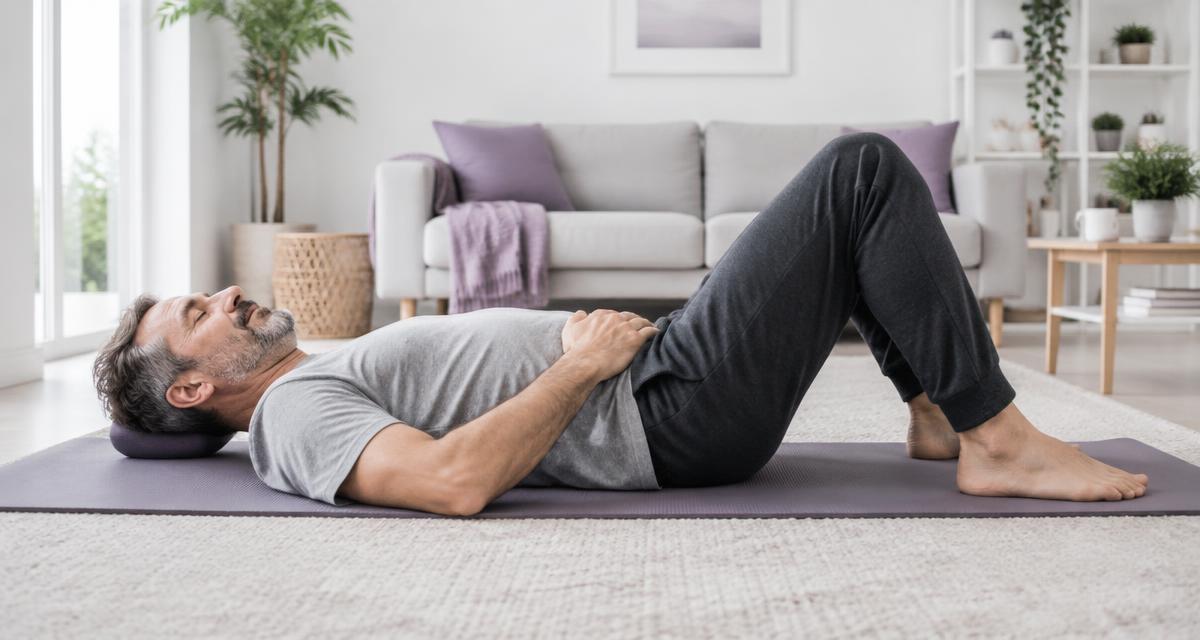
- Lying down. On your back, knees bent and apart. Do 3 strong squeezes.
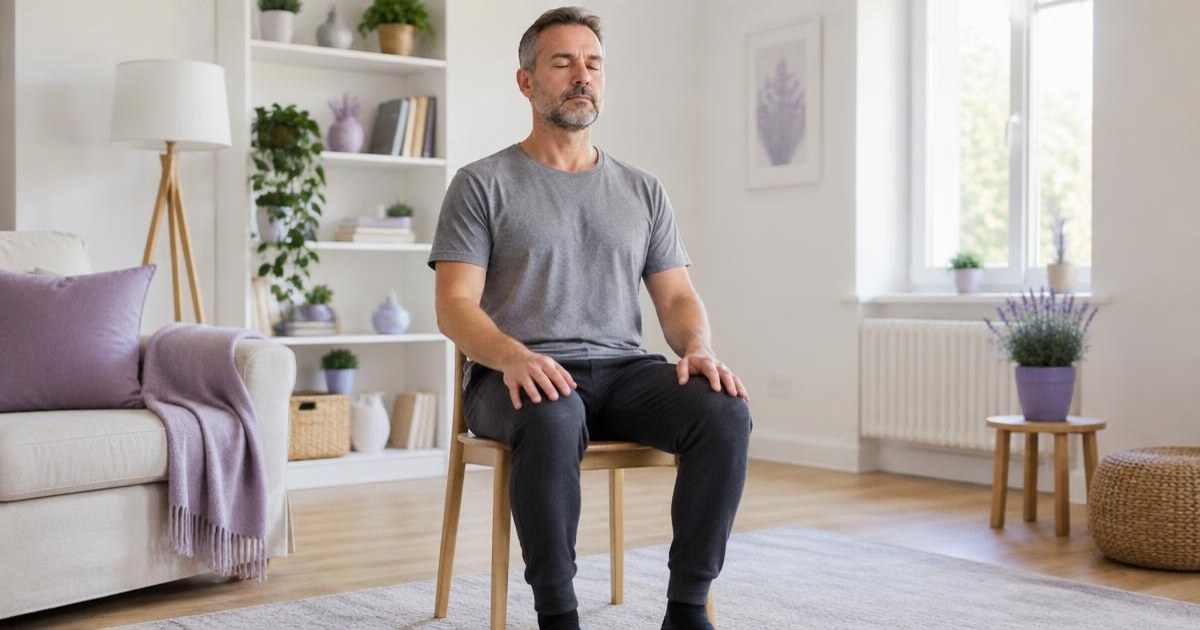
- Sitting. On a chair, knees apart. Lift the pelvic floor without lifting your buttocks off the chair. Do 3 strong squeezes.
- Standing. Feet apart. Do 3 strong squeezes.
- Twice a day. Do all three positions in the morning and again in the evening.
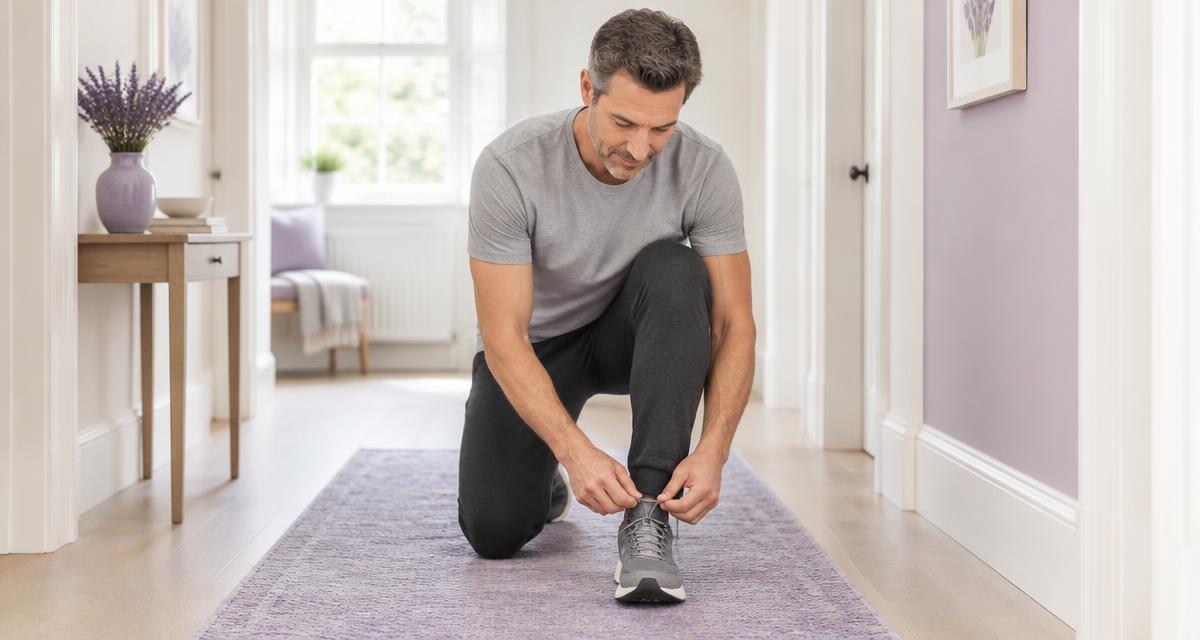
- While walking. Now and then, lift the pelvic floor to about half strength.
- After urinating. Squeeze strongly to clear the last drops.
- During sex. Tighten the muscles rhythmically to help keep the erection firm.
How long to hold. In the trial, a physiotherapist set each man's hold time. At home, build up towards holds of up to 10 seconds with 10 seconds of rest in between, as an NHS physiotherapy leaflet for men suggests. The leaflet puts the quality of each set first and says not to try too hard (Lancashire and South Cumbria NHS Foundation Trust).
Keep it clean. Breathe normally, and keep your belly and buttocks relaxed (Dorey et al., 2004).
Let go fully. If it is hard to relax after a squeeze, or the exercises hurt, your pelvic floor may be tight rather than weak. A tense pelvic floor can itself show up as erection problems or pain with erection or ejaculation (Cleveland Clinic). Start with our guides to a tight pelvic floor and reverse Kegels, and consider seeing a pelvic floor physiotherapist.
In the trial, this routine was taught over five sessions with a physiotherapist and biofeedback. Training on your own is not the same thing, so check your technique carefully. Our guide to Kegel exercises for men covers the technique step by step.
Not sure where you are starting from? Take the 3-minute quiz.
How long it takes
Plan on months, not weeks. The trial's authors concluded that the exercises should be properly taught and practised for at least 3 months, after which a maintenance routine can be kept up for life. In their trial, most of the improvement came in the first 3 months and held at 6 months with home exercises (Dorey et al., 2004).
The authors also noted individual men who reported their night-time erections coming back after 1 to 4 weeks of exercises, before erections during sex improved. That was a self-reported observation in a few cases, not a tested result, so it says little about what to expect (Dorey et al., 2004).
Kegels and the rest of your health
Your heart. Erection problems can be an early warning sign of heart disease. The arteries in the penis are smaller than those that supply the heart, so trouble can show up there years before symptoms such as chest pain (Mayo Clinic). In the large US study, erectile dysfunction was linked to heart disease, high blood pressure and diabetes (Feldman et al., 1994).
Exercise. A systematic review of exercise studies recommended supervised aerobic exercise of moderate to vigorous intensity for 40 minutes, four times a week, for 6 months. That is about 160 minutes a week, and it helped men whose erection problems were linked to inactivity, obesity, high blood pressure, metabolic syndrome or heart disease (Gerbild et al., 2018).
Weight. In a 2-year trial of 110 obese men with erectile dysfunction, 17 of the 55 men coached to lose weight and move more reached a normal erectile function score, against 3 of the 55 men in the control group (Esposito et al., 2004). The NHS also lists losing weight if you are overweight, stopping smoking, eating a healthy diet and exercising daily (NHS).
Medicines. The NHS names medicines called PDE-5 inhibitors, such as sildenafil (Viagra), as the main treatment for erectile dysfunction. They increase blood flow to the penis (NHS). The authors of the main trial suggest pelvic floor exercises as a first option for men who prefer to avoid medicines or surgery, and as an addition for men who are already on other treatment. When they set their results beside a separate sildenafil trial, scores rose more with sildenafil, about 10 points against 8 on the same scale at 3 months (Dorey et al., 2004).
When to see a doctor
See a GP if erection problems keep happening (NHS). See a doctor before you start, or alongside training, if you have:
- erection problems that started suddenly
- erection problems with no obvious cause, especially if you are under 50 or have diabetes. A doctor may want to check your heart before you start any treatment (Mayo Clinic)
- pain in the pelvis, penis or testicles, or pain during the exercises
- blood in your urine or semen
- recent pelvic or prostate surgery
If you get sudden pain or discomfort in your chest that does not go away, call emergency services straight away (999 in the UK) (NHS).
Where Adaging fits
Adaging is a daily pelvic floor program for men, 5 to 10 minutes a day. In the quiz you can choose firmer erections as your main goal. Every session is built from four exercises (Release, Hold, Flick and Ladder) and starts and ends with letting go, and you record your own numbers on set days to see what changes. It is self-guided, so it is not the same as the physiotherapist-taught training in the studies above. It is an educational program, not a medical service, so see a doctor about erection problems as well. The quiz takes 3 minutes.
Frequently asked questions
Sources
- Randomised controlled trial of pelvic floor muscle exercises and manometric biofeedback for erectile dysfunction. Dorey G et al. British Journal of General Practice. 2004.
- Impotence and its medical and psychosocial correlates: results of the Massachusetts Male Aging Study. Feldman HA et al. The Journal of Urology. 1994.
- Pelvic floor exercise versus surgery in the treatment of impotence. Claes H, Baert L. British Journal of Urology. 1993.
- Treatment of erectile dysfunction by perineal exercise, electromyographic biofeedback, and electrical stimulation. Van Kampen M et al. Physical Therapy. 2003.
- Pelvic floor muscle training improves erectile dysfunction and premature ejaculation: a systematic review. Myers and Smith. Physiotherapy. 2019.
- Pelvic floor muscle training for erectile function in men undergoing radical prostatectomy: a systematic review of randomized controlled trials. Akdagcik Z et al. World Journal of Urology. 2026.
- Early postoperative pelvic-floor biofeedback improves erectile function in men undergoing radical prostatectomy: a prospective, randomized, controlled trial. Prota C et al. International Journal of Impotence Research. 2012.
- App-based therapy of erectile dysfunction using a digital health application (EDDIG study): a randomized, single-blind, controlled trial. Kliesch S et al. European Urology Focus. 2024.
- An app for ED?. MDedge. 2024.
- Pelvic floor muscle exercise information sheet for men. Lancashire and South Cumbria NHS Foundation Trust.
- Hypertonic pelvic floor. Cleveland Clinic.
- Erectile dysfunction: A sign of heart disease?. Mayo Clinic.
- Physical activity to improve erectile function: a systematic review of intervention studies. Gerbild H et al. Sexual Medicine. 2018.
- Effect of lifestyle changes on erectile dysfunction in obese men: a randomized controlled trial. Esposito K et al. JAMA. 2004.
- Erectile dysfunction (impotence). NHS.
- Chest pain. NHS.
Adaging is an educational wellness program. It is not medical advice and does not replace a consultation with a doctor.
Adaging Editorial Team
We write from published research and clinical guidelines, and we say what the evidence does not show. How we write and check our content